 English
Selecting the right gate driver hardware is an important step in developing reliable power conversion systems. For engineering teams working with industrial drives, renewable energy equipment, electric vehicles, and high-power converters, the decision affects switching performance, electrical safety, thermal management, and long-term system reliability. A structured purchasing checklist helps engineers compare technical specifications, identify integration risks, and ensure that selected components meet application requirements rather than simply matching a nominal voltage or current rating.
At Firstack, we specialize in the research, development, and sales of power semiconductor drivers, power stacks, and testing equipment. Our digital gate driver solutions are designed to support demanding power electronics applications. By evaluating several critical factors before purchasing, engineering teams can make better-informed decisions and reduce costly redesigns during system development.
1. Confirm Power Device Compatibility
The first purchasing consideration is whether the driver matches the selected power semiconductor. IGBTs and silicon carbide (SiC) MOSFETs have different gate-drive requirements, including recommended turn-on and turn-off voltages, switching characteristics, and protection needs. Engineers should review the semiconductor datasheet before comparing available driver models.
When evaluating IGBT driver boards, check the supported module package, blocking voltage, gate voltage range, and electrical interface. A gate driver board designed for a particular module family may simplify integration, but compatibility should always be confirmed against the exact part number and system configuration.
2. Evaluate Output Power and Gate Current
Output power and peak gate current influence how effectively a driver can charge and discharge a semiconductor's gate during switching. However, selecting a product solely because it offers a high peak current can lead to an unsuitable design. Engineers should also consider gate charge, switching frequency, output resistance, and operating temperature.
Estimate the required drive current using the semiconductor's gate-charge characteristics and intended switching conditions. Then verify that the driver can meet the requirements without exceeding its thermal or electrical limits.
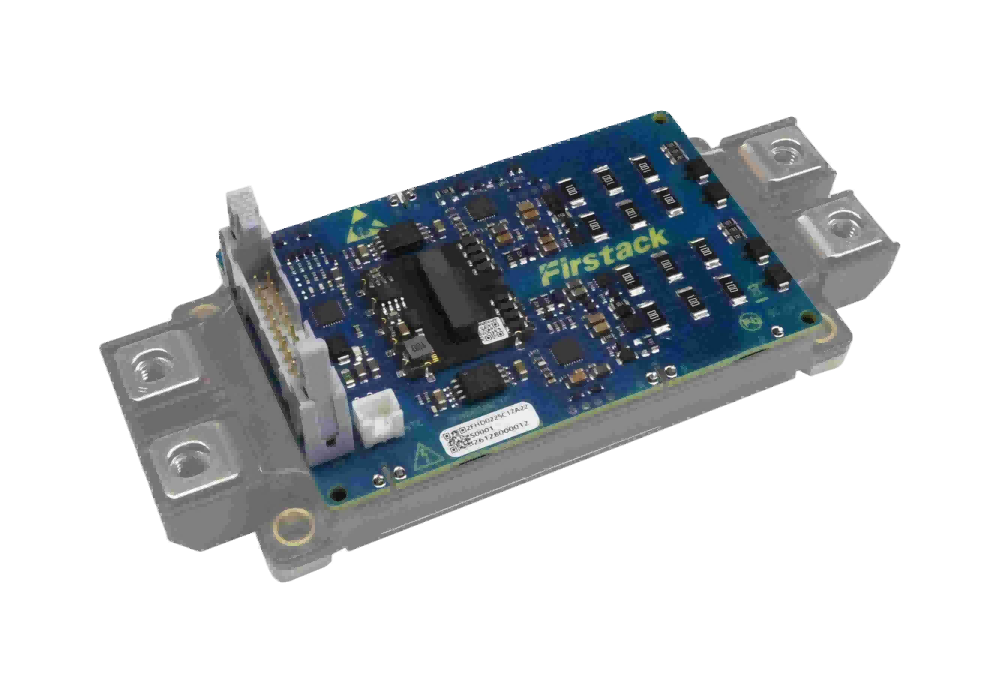
At Firstack, our 2FHD0220 series offers dual-channel driving, up to 20A peak gate current, and up to 2W output power per channel under specified conditions. This series supports compatible 62mm SiC MOSFET or IGBT modules, with configurable gate voltage. Engineers should confirm the specific model's datasheet ratings before final selection.
3. Review Protection Functions and Fault Handling
Protection features are essential when a power converter encounters abnormal operating conditions. Undervoltage lockout (UVLO) helps prevent operation when the driver supply falls below its specified threshold. Miller clamping can help reduce unintended turn-on caused by voltage transients during switching.
Short-circuit protection and soft shutdown are also worth evaluating where the application requires them. Engineers should examine fault detection thresholds, response times, shutdown behavior, and fault signaling rather than assuming that every driver implements protection in the same way.
When comparing IGBT driver boards, document the protection functions required by the system and verify their behavior under realistic fault scenarios. The selected design should align with the power device's short-circuit withstand characteristics and the overall converter protection strategy.
4. Check Electrical Interfaces and Integration Requirements
Interface compatibility can significantly affect development time. Before purchasing, confirm the input signal type, connector arrangement, control voltage, channel configuration, and communication or fault-feedback requirements. Engineers should also assess whether the driver supports the intended power-stage topology.
Mechanical integration deserves equal attention. Compare IGBT driver boards dimensions, mounting points, connector access, insulation requirements, and clearances against the existing assembly. A driver with suitable electrical ratings may still require substantial redesign if its mechanical arrangement does not fit the power module or enclosure.
A well-matched gate driver board can simplify integration and commissioning, particularly when its interface and protection behavior are clearly documented. At Firstack, our digital gate driver solutions are developed for power electronics applications requiring reliable switching control, flexibility, and practical system integration.
5. Assess Thermal Performance and Environmental Limits
Operating temperature affects output capability, component lifetime, and system reliability. Purchasing teams should review the specified ambient temperature range alongside output power derating, cooling conditions, and installation environment. Maximum ratings should not automatically be treated as continuous operating targets under every load condition.
For applications exposed to vibration, temperature fluctuations, or demanding industrial environments, engineers should also check applicable environmental qualifications and mechanical requirements. Validation should reflect the actual enclosure, airflow, switching frequency, and load profile.
For example, the 2FHD0220 series specifies an operating ambient temperature range of -40°C to 85°C. Its output capability depends on the relevant operating conditions, so engineers should consult the applicable datasheet rather than assume maximum output remains available across the entire temperature range.
6. Compare Documentation, Support, and Lifecycle Needs
A purchasing decision should consider more than the initial component price. Complete technical documentation helps engineering teams evaluate performance, troubleshoot integration issues, and maintain consistent production quality. Useful resources include product datasheets, application manuals, connection diagrams, and clear ordering information.
Teams should also establish whether the supplier can clarify configuration differences, recommend compatible models, and provide technical support during development. For long-term projects, confirm product availability, revision management, and the process for handling component changes.
At Firstack, our portfolio includes power semiconductor drivers, power stacks, and testing equipment. Our gate driver product range includes plug-and-play options and configurable solutions, allowing engineering teams to investigate different integration approaches according to their application requirements.
Make Purchasing Decisions With a Complete Checklist
Choosing suitable gate-driving hardware requires a coordinated review of electrical compatibility, output performance, protection, interfaces, thermal limits, documentation, and supplier support. Engineering teams should define their requirements first, shortlist compatible products, and validate the preferred solution under representative operating conditions before approving a purchase.
By following a structured evaluation process, teams can reduce integration risks and avoid selecting components based on headline specifications alone. At Firstack, we support power electronics development with driver solutions designed for demanding applications. A carefully selected gate driver board can help establish a reliable foundation for efficient switching, robust protection, and maintainable system design.

