 English
Renewable energy systems and industrial automation depend on efficient, reliable, and precise electrical power conversion. From solar inverters and wind power converters to factory motor drives and automated production equipment, power electronics solutions help regulate voltage, control current, and manage energy flow. As industries pursue higher efficiency and greater operational stability, selecting suitable components and integrating them into well-designed systems have become increasingly important. Understanding the main technologies, applications, and design considerations helps engineers develop systems that meet demanding performance requirements.
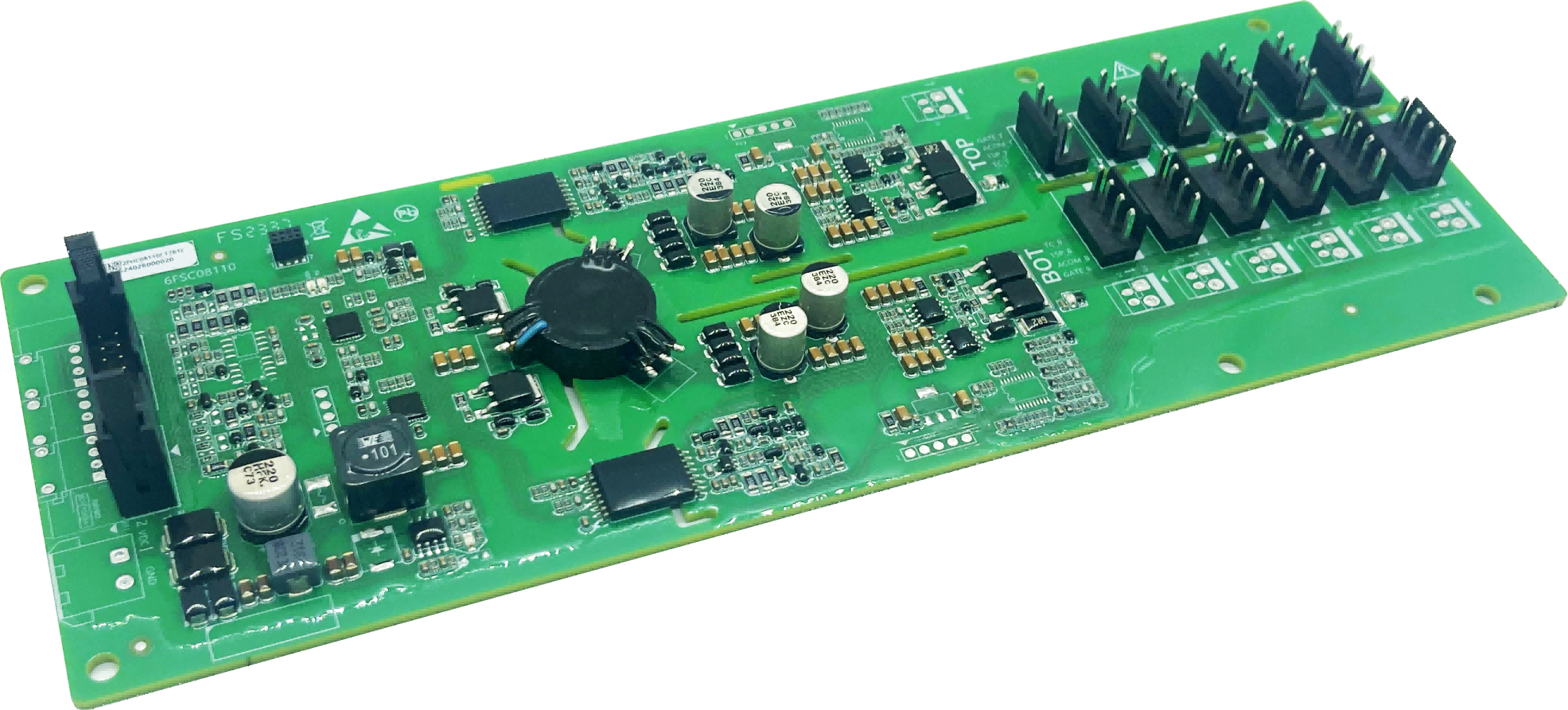
What Are Power Electronics Solutions?
Power electronics involves converting and controlling electrical energy using semiconductor devices, switching circuits, control systems, and associated protection components. These technologies support applications that require AC-to-DC conversion, DC-to-AC inversion, voltage regulation, and controlled motor operation.
Effective power electronics solutions combine several elements, including power semiconductor devices, IGBT gate drivers, control circuits, thermal management, electrical isolation, and protection mechanisms. Each element contributes to overall performance. Semiconductor devices handle switching, control systems determine operating behavior, and driver circuits deliver the signals required for reliable device operation.
System requirements vary according to voltage, current, switching frequency, operating temperature, and environmental conditions. Engineers must therefore evaluate the complete power-conversion architecture rather than select individual components solely by their headline specifications.
Applications in Renewable Energy Systems
Renewable energy installations require dependable conversion equipment to connect variable energy sources with electrical loads and power grids. Solar photovoltaic systems use inverters to convert the DC electricity produced by panels into AC electricity. Wind turbines rely on power converters to manage generator output and support grid-compatible operation.
These applications place significant demands on switching performance, thermal stability, and electrical protection. Semiconductor losses affect conversion efficiency, while switching transients and electromagnetic interference can influence surrounding control and communication circuits. Careful component selection and circuit design help address these challenges.
An IGBT gate driver is one important component in converter designs that use insulated-gate bipolar transistors. It provides suitable gate-drive voltage and current, supports controlled switching, and may incorporate functions such as undervoltage lockout and fault signaling. The appropriate configuration depends on the selected semiconductor, converter topology, and operating conditions.
Renewable energy equipment also needs to accommodate changing loads, temperature fluctuations, and long operating periods. Engineers should evaluate cooling capacity, insulation requirements, maintenance access, and protection coordination alongside electrical performance.
Supporting Industrial Automation and Motor Drives
Industrial automation relies on controlled electrical power to operate pumps, compressors, conveyors, robotic equipment, and production machinery. Variable-frequency drives regulate motor speed and torque by adjusting the electrical supply, helping equipment match its output to actual process requirements.
Power conversion is also essential for servo systems, industrial power supplies, welding equipment, and automated manufacturing lines. Different applications demand different combinations of switching speed, current capability, control precision, and overload tolerance.
For high-power motor drives, IGBTs remain useful because they can handle substantial voltage and current levels. Their performance depends partly on the gate-drive circuit, which must provide appropriate turn-on and turn-off conditions while managing switching losses and unwanted voltage transients.
Engineers should consider operating duty cycles, ambient temperature, load variations, and fault scenarios when designing industrial systems. A technically suitable component must also integrate with the controller, protection architecture, cooling system, and available installation space. These considerations help improve equipment reliability and reduce avoidable downtime.
Key Factors in Selecting Power Semiconductor Drivers
Choosing suitable drivers begins with understanding the electrical requirements of the target semiconductor. Gate voltage, peak source and sink current, switching frequency, propagation delay, and isolation requirements all influence IGBT gate driver selection. Protection functions should also match the application, particularly where short circuits or abnormal supply conditions could damage expensive power devices.
Thermal performance deserves equal attention. Driver losses, switching behavior, and surrounding temperatures can affect long-term stability. Engineers should examine datasheet limits and verify performance through testing under representative operating conditions.
Electromagnetic compatibility is another important consideration. PCB layout, gate-loop inductance, grounding, and switching speed can influence ringing and interference. A well-designed driver helps control switching behavior, but successful integration still requires careful circuit layout and system-level validation.
How Firstack Supports Industrial Power Conversion
At Firstack, we specialize in the research, development, and sales of power semiconductor drivers, power stacks, and testing equipment. Our solutions serve strategically important industries, including renewable energy, rail, power transmission, and motor drives, where reliable power conversion and effective system integration are essential.
Our digital gate driver technologies emphasize reliability, flexibility, and electromagnetic interference performance. For engineering teams developing power converters and industrial equipment, driver selection should align with the semiconductor specifications, switching requirements, protection strategy, and overall system architecture.
We also recognize the importance of testing during development. Evaluating switching waveforms, thermal behavior, protection responses, and electromagnetic compatibility helps engineers identify potential problems before deployment. By considering driver technology alongside power stacks and testing requirements, development teams can make more informed decisions about system integration.
Building More Reliable and Efficient Power Systems
Renewable energy and industrial automation share a need for controlled switching, efficient conversion, and dependable operation. However, their electrical loads, environmental conditions, and protection requirements can differ considerably. Engineers should assess the entire system, from semiconductor characteristics and driver selection to thermal management and validation testing.
At Firstack, we support power electronics development through driver technologies, power stacks, and testing equipment suited to demanding industrial applications. A systematic approach to component selection and integration helps engineering teams develop power-conversion systems that meet practical requirements for efficiency, stability, and long-term reliability.

