 English
Selecting between insulated-gate bipolar transistors (IGBTs) and silicon carbide (SiC) devices is an important decision in power electronics design. Both technologies support efficient power conversion, but their switching behavior, operating characteristics, thermal requirements, and cost profiles differ. Engineers must consider the complete application rather than choosing a device based on a single specification.
Understanding these differences helps engineers design reliable inverters, motor drives, renewable energy systems, and industrial power equipment. Device selection also affects gate-drive circuits, cooling arrangements, electromagnetic compatibility, and testing procedures. At Firstack, we work across power semiconductor drivers, power stacks, and testing equipment, supporting engineers as they evaluate device technologies and develop practical power conversion solutions.
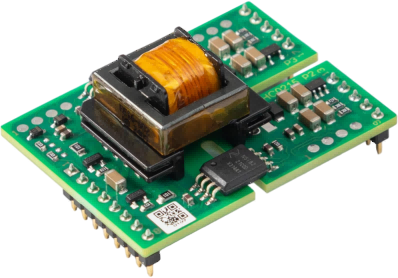
1. Understand the Fundamental Differences Between IGBT and SiC
IGBTs combine a MOS-controlled gate with bipolar conduction, making them suitable for many medium-power and high-power switching applications. They offer established manufacturing processes, mature design practices, and competitive costs for numerous industrial systems. However, their turn-off behavior includes tail current, which can increase switching losses as operating frequency rises.
SiC MOSFETs use a wide-bandgap power semiconductor material that supports high-voltage operation, faster switching, and lower switching losses in many applications. These characteristics can improve efficiency and reduce the size of passive components. Nevertheless, actual performance depends on device selection, operating conditions, circuit design, and thermal management.
2. Match Device Characteristics to Application Requirements
The right choice depends on the system's operating profile. Engineers should evaluate DC bus voltage, current demand, switching frequency, load variation, ambient temperature, and acceptable power losses before selecting a device.
IGBTs remain practical for applications where switching frequencies are moderate, upfront costs matter, and existing designs already provide adequate thermal performance. SiC devices become attractive when switching losses, power density, or cooling requirements significantly influence overall system performance.
For renewable energy inverters, motor drives, and power transmission equipment, a complete loss analysis is more useful than comparing isolated datasheet values. We recommend assessing conduction losses and switching losses across expected operating conditions to understand the system-level benefits of each technology.
3. Evaluate Gate Driving and Protection Requirements
Gate-drive design directly affects switching behavior, efficiency, and device protection. An IGBT gate driver must deliver suitable gate voltage and current while supporting appropriate isolation, switching control, and protection functions. Engineers should verify compatibility with the selected device rather than relying on generic driver specifications.
SiC MOSFETs often require additional attention to gate-voltage limits, parasitic inductance, electromagnetic interference, and rapid voltage transitions. Gate resistance, PCB layout, and protection response must be evaluated together. Reusing an existing IGBT gate driver without checking these parameters may compromise the advantages of SiC technology or introduce reliability risks.
At Firstack, our programmable ASIC research is optimized for next-generation SiC devices, supporting more flexible gate-driver designs for advanced power systems. This direction reflects the importance of matching control and drive capabilities to evolving power semiconductor requirements.
4. Consider Thermal Management and System Costs
Device efficiency affects more than electricity consumption. Power losses determine heat generation, which influences heatsink selection, cooling requirements, enclosure dimensions, and long-term operating conditions. Although SiC devices can reduce switching losses, engineers should not assume that every application will automatically require less cooling.
A meaningful cost comparison should include semiconductor prices, gate-drive circuitry, cooling hardware, passive components, testing, and maintenance considerations. IGBTs may offer better overall value in established, cost-sensitive systems, while SiC devices can justify higher initial costs when improved efficiency or compactness delivers measurable system benefits.
5. Validate Performance Before Finalizing the Design
Simulation helps engineers estimate losses and thermal behavior, but laboratory testing remains essential. Double-pulse testing, switching waveform analysis, temperature measurements, and protection verification can reveal issues that calculations alone may miss.
With more than 150 intellectual property rights, we support power electronics development through our work in IGBT gate drivers, power stacks, and testing equipment. Our solutions serve renewable energy, rail, power transmission, and motor drive applications.
Make the Right Choice for Your Power Electronics Design
Choosing between IGBTs and SiC MOSFETs requires balancing switching performance, operating conditions, gate-drive design, thermal requirements, and total system cost. Neither technology is universally superior; the best option depends on measurable application needs.
At Firstack, we focus on helping engineers address these challenges through driver technology, testing capabilities, and power system expertise. A structured evaluation process allows design teams to select suitable devices, validate performance, and develop reliable, efficient power conversion systems.

